ABB Partners with NASCAR to Power San Diego Race with Microgrid Network
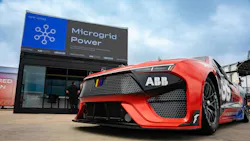
ABB, the Official Electrification Partner of NASCAR, recently announced the launch of ABB NASCAR Grid Control – a new fan experience that gives racegoers a first-ever look into the world of NASCAR's race control and operational sustainability efforts. The new technology debuted at NASCAR San Diego Weekend presented by Anduril, June 19-21, where the league powered the street race from a temporary network of microgrids designed for energy reliability, savings and transparency without reliance on the local utility grid.
ABB NASCAR Grid Control
ABB NASCAR Grid Control is a 20-by-8-by-18-ft glass pod outfitted with 11 live video feeds and data dashboards that give race aficionados unprecedented insight into the inner-workings of a NASCAR race weekend.
"ABB NASCAR Grid Control is the visible nerve center for racetrack and operational sustainability efforts," said Chris Shigas, ABB VP of Strategic Partnerships, in the press release. "We're showing how this network of microgrids is not only innovative for a NASCAR race, but a model for how major sporting events, concerts and festivals can operate without straining local utilities and power grids."
For the first time in NASCAR history, fans got a peek into the technology behind NASCAR Race Control, the central hub monitoring and officiating all on-track activities across the league's national series. Inside ABB NASCAR Grid Control, racegoers can step into the role of NASCAR engineers and officials with an unprecedented simulcast of what they see in NASCAR Race Control, like cutting-edge telemetry technology, live data streams, advanced analytics and more used to analyze competition metrics and manage scoring of the race.
ABB NASCAR Grid Control also features real-time energy and carbon performance dashboards, enabled by the off-grid ABB management system and intelligent asset monitoring solutions, providing real-time tracking of event operations. Efforts support NASCAR IMPACT, of which ABB is a founding member, and its goal of achieving net zero operating emissions by 2035.
"Tracking energy usage is essential to reducing our operational carbon emissions," said Eric Nyquist, NASCAR senior VP and Chief IMPACT Officer, in the press release. "We know that providing temporary event power is one of NASCAR's carbon-intensive activities. Now, using ABB's energy management technology at a major race like this, we can get more granular, zone-specific usage data to understand the impact of new energy strategies."
The data includes:
- Total carbon savings: Emissions avoided during the event
- Zone-specific energy optimizations: Generator fuel and carbon savings for four key areas, including the fan experience, operations compound, grandstands and hospitality suites
- Hybrid performance: Reduction in diesel runtime made possible by advanced energy storage utilization
- Off-Grid energy management
Held at Naval Base Coronado, NASCAR San Diego Weekend ran without reliance on the local utility grid. Working with ABB, NASCAR created its own temporary energy supply to power the race and weekend activities, like pit road, the fan experience and behind-the-scenes operations.
The energy supply system features a network of microgrids similar to the local energy grid and optimized with a hybrid energy strategy, combining Battery Energy Storage Systems (BESS) with traditional diesel generators. These hybrid systems rely on BESS as the primary source of energy with the diesel generator only turning on for 2-3 hours a day to charge the battery, instead of running 24 hours a day, reducing fuel use and emissions.
Also, Suburban Propane, the San Diego Weekend Official Renewable Propane Partner, powered event concessions and the generators powering EV chargers available to attendees with renewable propane.
Launched in 2024 with the unveiling of the ABB NASCAR EV Prototype, the ABB NASCAR Electrification Innovation Partnership explores high-performance electric racing and creates strategic opportunities for electrification in motorsports, including events, infrastructure, race vehicles and energy education.