Toyota Announces Plans to Invest $912 Million in Five U.S. Hybrid Vehicles Factories
Key Highlights
- Toyota's $912 million investment will create 252 new jobs across five states, boosting hybrid vehicle production in the U.S.
- The expansion includes new hybrid engine and transaxle lines, with production starting between 2027 and 2028, supporting Toyota's electrification goals.
- Toyota's broader $10 billion investment over five years aims to strengthen its U.S. manufacturing footprint and meet increasing demand for electrified vehicles.
- Beyond manufacturing, Toyota is investing in workforce development through initiatives like the $110-million Driving Possibilities program to support STEM education.
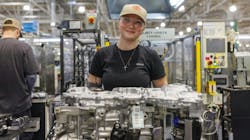
Toyota recently announced it will be investing $912 million in manufacturing plants in Kentucky, Missouri, Mississippi, Tennessee and West Virginia. that will create 252 new jobs, increase hybrid capacity and bring hybrid-electric Corollas to its production lineup. The Nov. 18 announcement said the investment is part of a larger plan to invest $10 billion over the next five years in its U.S.-based manufacturing plants for hybrid vehicles.
“Customers are embracing Toyota’s hybrid vehicles, and our U.S. manufacturing teams are gearing up to meet that growing demand,” said Kevin Voelkel, senior VP, manufacturing operations, in the press release. “Toyota’s philosophy is to build where we sell, and by adding more American jobs and investing across our U.S. footprint, we continue to stay true to that philosophy.”
Here's a state-by-state look at the new investments:
Toyota West Virginia: $453 million, 80 jobs
Toyota’s Buffalo, WV, plant will add 80 jobs to increase assembly of 4-cylinder hybrid-compatible engines, sixth-generation hybrid transaxles and rear motor stators. The expansion, which will begin production in 2027, also includes new shift patterns for greater efficiency. Toyota West Virginia assembles more than one million engines, transmissions and hybrid transaxles annually and represents a $3.3-billion investment.
Toyota Kentucky: $204.4 million, 82 jobs
Toyota’s largest plant globally, located in Georgetown, KY, will add 82 jobs and install an all-new machining line for 4-cylinder hybrid-compatible engines, lining off in 2027. The powertrain facility can assemble up to 700,000 units annually. Toyota Kentucky employs nearly 10,000 team members and represents an investment exceeding $11 billion.
Toyota Mississippi: $125 million
Toyota’s Blue Springs, MS, plant will add the hybrid-electric Corolla – marking the first electrified Corollas assembled in the U.S. The plant employs 2,400 and represents a $1.3 billion investment.
Toyota Tennessee: $71.4 million, 33 jobs
Toyota’s casting plant in Jackson, TN, will add 33 jobs to increase production of hybrid transaxle cases and housings and engine blocks for hybrid vehicles. The investment includes three all-new production lines and will increase production capacity by nearly 500,000 units annually. Production on the new lines will start in 2027 and 2028. The plant represents a $497 million investment.
Toyota Missouri: $57.1 million, 57 jobs
Toyota’s casting plant in Troy, MO, will add 57 jobs and a new cylinder head production line for hybrid vehicles. The new line, which will start production in 2027, will increase plant capacity by more than 200,000 cylinder heads annually and bring the total investment to $629 million.
Toyota’s Commitment to the U.S.
Currently, Toyota assembles about half of the vehicles it sells in the U.S., with North American manufacturing facilities assembling more than three-quarters (76%) of the vehicles it sells in the U.S.
Toyota’s multi-pathway powertrain approach continues to drive steady growth in electrified vehicles, including hybrids, plug-ins and all electric, which now account for nearly 50% of the company’s U.S. sales.
Beyond its manufacturing investments, Toyota is also actively preparing the workforce of the future. The Toyota USA Foundation recently launched Driving Possibilities, a $110-million initiative to support PreK-12 education and beyond. The long-term program aims to close educational gaps through innovative, hands-on STEM learning while addressing the essential needs of students and families.